



"Epistemic Decolonization and the Southeast Asian Experience" with Khairudin Aljunied
As part of its Global Reflections series, Institute Social hosted renowned historian Prof. Dr. Khairudin Aljunied from the National University of Singapore on October 9. In his lecture, “Decolonizing Knowledge: The Experience of Southeast Asia” Prof. Aljunied offered a critical look at the Western-dominated structure of knowledge production, while highlighting the distinctive contributions and alternative ways of thinking that have emerged from Southeast Asia.
Aljunied examined how the so-called universality of Western modes of knowledge is deeply rooted in specific historical and cultural contexts. Referring to Dipesh Chakrabarty’s concept of “provincializing Europe” and Walter Mignolo’s idea of “border thinking,” he emphasized the need to re-center local experiences and marginalized thinkers within global knowledge frameworks. He argued that binary categories such as modern/traditional, progressive/conservative, and secular/religious often oversimplify social realities and obscure epistemic diversity.
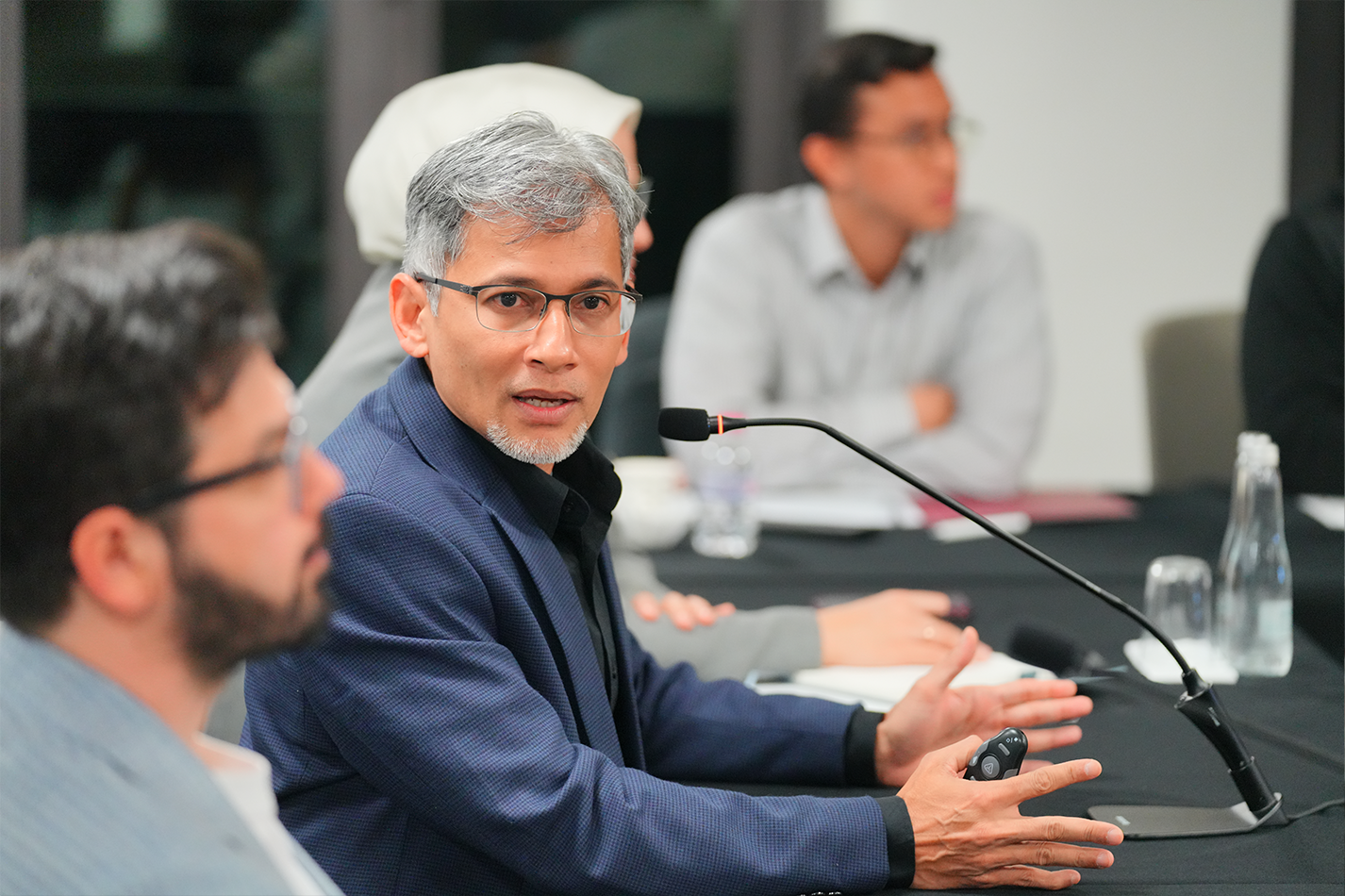
According to Aljunied, Southeast Asia holds a rich and multilayered intellectual tradition that cannot be adequately understood through Western concepts alone. Although regional intellectuals may have seemed marginal at first, over time they became a vital part of society, helping to shape a way of thinking that is firmly rooted in local contexts and experiences.
At the end of the session, Aljunied emphasized that pursuing knowledge in a way that is fair, locally grounded, and inclusive is not just an academic goal, but also a moral responsibility. Justice, representation, and locality must take center stage in knowledge production and in this regard, the Southeast Asian experience offers a compelling and inspiring model on a global scale.
Participants left the session with new insights, having had the chance to rethink traditional views of knowledge through the rich historical and theoretical framework provided by Prof. Aljunied.
0216 422 00 22
[email protected]
Burhaniye Mah. Hacı Reşit Paşa Sok.
No:18 34676 Üsküdar / İstanbul